

Yoju casino Plinko
Introduction
Plinko has become one of the most discussed instant-win casino formats for a simple reason: it looks almost effortless, yet it can produce very different results from one session to the next. On the Yoju casino Plinko page, that contrast is exactly what deserves attention. At first glance, the idea is easy to grasp. You choose a stake, set a risk level, drop a ball, and watch it bounce through a field of pins until it lands in a payout slot. But the real player experience is not defined by that simplicity alone. It is shaped by distribution, pace, variance, and the way the selected settings change the session.
I have spent enough time analyzing casino products to say that Plinko stands apart from both classic slots and traditional table games. It does not rely on reels, paylines, card decisions, or long bonus for Canadian players sequences. Instead, it turns probability into something visual. You are not just waiting for an outcome; you are watching randomness unfold in real time. That is a major part of its appeal, and also the reason why many players misread it at the start.
This article focuses strictly on Yoju casino Plinko as a game page, not as a broad casino review. My goal is practical: explain how Plinko works, why it attracts so much attention, what the risk settings actually mean in play, where the strengths and limitations are, and what a player in Canada should understand before launching a session.
What Plinko Is and Why It Draws So Much Attention
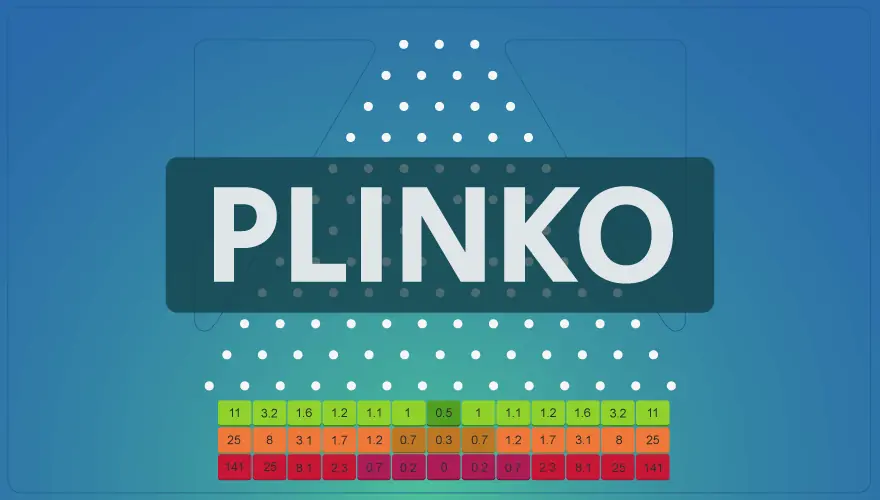
Plinko is a probability-driven casino game built around a falling ball and a board filled with pegs. Each collision sends the ball left or right until it reaches one of the multiplier slots at the bottom. The stake is multiplied by the value of the final slot, which means the entire round is decided by the path of the drop.
That core concept is old enough to feel familiar even outside gambling. Many players recognize the format instantly because it resembles televised game-show boards and carnival-style chance devices. In an online casino environment, though, the format has been adapted into a fast betting product with adjustable settings. That combination of visual clarity and high session flexibility is what makes Plinko so noticeable.
On a practical level, Yoju casino Plinko attracts attention because it removes a lot of friction. There are no paylines to study, no symbol hierarchy to memorize, and no feature map to decode. A new player can understand the interface in under a minute. Yet that easy entry point hides a more important truth: the game can feel calm, balanced, aggressive, or brutally swingy depending on how the risk profile is set.
One of the most interesting things about Plinko is that it makes randomness feel personal. In a slot, the result appears as a completed spin. In Plinko, the ball seems to fight its way down the board. Even though the outcome is still governed by the underlying random model, the visual path creates tension. Players often feel as if a near-miss happened in front of them rather than behind the scenes. That visual drama is not just decoration; it changes how the session is perceived.
How the Yoju casino Plinko Mechanics Actually Work
The standard Plinko session revolves around a few adjustable parameters: bet size, number of rows, and risk level. Once those are selected, the ball is released from the top of the board. As it hits each peg, it is deflected left or right. After repeated deflections, it lands in one of the multiplier pockets at the bottom.
The key point is that the board does not reward all landing positions equally. In most Plinko layouts, the center slots are more common and usually carry lower multipliers, while the outer edge slots are rarer and usually hold the biggest returns. That is not an accident. It reflects the probability distribution of the drop path. Reaching the middle requires many common left-right combinations. Reaching the far edge requires a much narrower sequence.
This is where many players make their first mistake. They see a simple board and assume each final slot has roughly the same chance. In practice, it is the opposite. The board is usually designed around a bell-shaped distribution, which means middle outcomes appear more often than extreme ones. The large multiplier exists precisely because it is expected to be rare.
Risk level changes how sharply that distribution affects your bankroll. A lower-risk setting generally compresses the payout table. Small and medium results appear more often, and the top-end multipliers are reduced. A higher-risk setting stretches the payout map. That means more outcomes cluster around low or very low returns, while a small number of edge positions can produce a much larger hit.
| Setting | What it changes | What it means in practice |
|---|---|---|
| Bet size | The value of each drop | Directly controls how quickly the bankroll rises or falls |
| Rows | The number of bounce decisions before landing | Can affect spread, pacing, and how outcomes are distributed |
| Risk level | The payout structure across the board | Changes whether the session feels smoother or more volatile |
| Auto-drop options | The speed and repetition of rounds | Can accelerate losses or gains if used without discipline |
Another detail worth understanding is that Plinko often feels more transparent than many casino formats because the route is visible. But visible does not mean controllable. The player chooses the setup, not the path. Once the ball is released, the outcome is still determined by the game’s random logic.
Why the Session Pace Feels So Different From a Slot
One reason Yoju casino Plinko stands out is the rhythm of play. Slots often build anticipation through spinning reels, line evaluation, and occasional feature triggers. Plinko operates on a shorter loop. Each round resolves quickly, but not instantly. There is a brief suspense window while the ball bounces downward, and that tiny delay matters more than it seems. Before you make a deposit, it is worth reading Yoju Casino crash games for the fee and speed details.
In real sessions, this creates a distinctive tempo. The game is fast enough to support repeated drops, yet visual enough to keep the player engaged between results. That balance is one of Plinko’s strongest design choices. It avoids the dead mechanical feeling of a pure instant-number game, but it is still much faster than bonus-heavy slots.
That speed can work in two opposite ways. For disciplined players, it makes Plinko easy to test in short sessions. You can quickly understand whether the chosen setup suits your comfort level. For impulsive players, the same speed can become a problem. A high-risk board with rapid auto-play can burn through a balance much faster than the clean interface suggests.
A memorable observation here is that Plinko often feels “slower emotionally than it is mathematically.” The rounds are short, but because each drop is visible, the brain treats it as an event rather than a number flash. That makes the session feel less aggressive than some rapid-fire casino products, even when the bankroll movement is actually sharp. Table game fans will get more out of this review after reading coupons review.
What Risk Levels Really Mean in a Live Session
If there is one setting that defines the Plinko experience, it is the risk profile. This is not a cosmetic option. It changes the entire character of the session.
On low risk, the board tends to produce more modest outcomes and fewer severe swings. You are less likely to see dramatic spikes, but you are also less likely to suffer long dry stretches where most drops return little or nothing meaningful. This mode usually suits players who want to observe the board, understand the payout flow, and keep their session steadier.
On medium risk, the balance shifts. The board still offers some regularity, but the gap between ordinary and strong outcomes becomes more noticeable. This is often the setting where Plinko feels most readable to casual players because there is enough movement to stay interesting without becoming relentlessly punishing.
On high risk, the session changes completely. The game starts leaning on rare but larger multipliers, which means many rounds may produce underwhelming results before a bigger hit appears. This can create intense anticipation, but it also increases the chance of bankroll erosion if the player overestimates how often those high-end outcomes should arrive.
- Low risk: more controlled pacing, smaller peaks, fewer violent swings.
- Medium risk: broader spread, more visible tension, balanced but still variable.
- High risk: larger upside on paper, but a harsher path to reach it.
What matters most is not which level is “best,” but whether the setting matches the player’s expectations. Someone looking for frequent reassurance will usually dislike a high-risk board. Someone chasing occasional standout multipliers may find low risk too flat. Plinko is unusually honest in this respect: the settings tell you a lot about the experience if you take them seriously.
Probabilities, Distribution, and the Misleading Simplicity of the Board
Plinko looks simple because the interface is simple. That does not mean the experience is simple. The real logic of the game lies in probability distribution, not in the visual charm of the falling ball.
The center of the board is generally where the ball is most likely to land. That is because there are more possible routes leading there. The outermost slots require more specific path sequences, so they appear less often. This is why the largest multipliers are usually placed at the edges. The board is paying for rarity, not generosity.
For the player, this means two things. First, rare top-end outcomes should never be treated as expected session anchors. They are possible, not dependable. Second, the apparent closeness of the ball to a high multiplier does not mean anything predictive. A ball can bounce near an edge several times and still fall back toward the center. Plinko is full of visual near-misses, and those moments can distort judgment if the player starts reading patterns where none exist.
This is one of the most important practical lessons on the Yoju casino Plinko page: the board can create the illusion of momentum. After a few central landings, a player may feel that an edge result is “due.” That is not how the game works. Each drop is governed by the random model, and previous outcomes do not force future correction.
| Common player impression | What is actually happening |
|---|---|
| The edge slot almost hit, so a big multiplier may come soon | Near-misses are visually dramatic but do not predict the next drop |
| The middle keeps landing, so the board feels safe | Frequent center outcomes are normal and may still produce slow losses |
| High risk means better value | High risk means wider swings, not automatic long-term advantage |
| The game is easy, so bankroll control matters less | Fast rounds and adjustable variance can make discipline even more important |
My second memorable observation is this: Plinko is one of the few casino products where the player can watch probability mislead them in real time. That is not a flaw in the design. It is part of the experience. But it is something a smart player should recognize early.
How Plinko Differs From Slots and Other Casino Games
Comparing Plinko to classic slots helps clarify what it really offers. A slot is usually built around reels, symbols, paylines or ways systems, bonus rounds, wilds, and layered payout events. Plinko strips all of that away. There are no reel combinations to follow and no feature sequence to wait for. The entire round is condensed into one visible descent and one final multiplier.
That makes Plinko more direct than most slot products. You know where the tension comes from, and you see it happen immediately. There is no long setup phase. For some players, that is a major advantage. For others, it removes the variety they enjoy in slot sessions.
Against roulette, Plinko feels more animated. Against crash-style products, it feels more tactile. Against blackjack or baccarat, it is far less strategic because there is no decision tree once the drop begins. The only meaningful choices are made before the round: stake, row count, and risk level.
So what does Yoju casino Plinko offer that these formats do not? Mostly, it offers visual probability with adjustable personality. A slot can be volatile, but the volatility is often hidden behind symbols and features. In Plinko, the distribution is easier to sense. A table game can feel skill-adjacent, but Plinko does not pretend to offer decision-based control. It is cleaner than that, and in some ways more honest.
Who Plinko Suits Best and Who May Not Enjoy It
Plinko can be a strong fit for players who like quick rounds, clear interfaces, and a direct connection between settings and session feel. It also suits players who want something more visual than a plain instant-win product but less layered than a feature-heavy slot.
It is especially suitable for the following player types:
- Players who want to understand the format within minutes rather than study a paytable for ten.
- Players who prefer short sessions with fast feedback.
- Players who like adjusting variance and immediately feeling the difference.
- Players who enjoy watching outcomes unfold rather than simply appear.
At the same time, Plinko is not for everyone. If a player wants narrative-style sessions, bonus rounds, expanding symbols, Yoju Casino free spins guide for real money casino players, or interactive feature chains, Plinko may feel too stripped down. If someone prefers games where choices during the round matter, it may also feel too passive. And if a player is highly sensitive to streaky bankroll movement, high-risk Plinko can become frustrating very quickly.
My third observation is that Plinko often appeals most to players who think they want simplicity, but what they actually enjoy is controlled tension. The interface is simple, yes. The emotional profile often is not.
Practical Strengths and Limitations of Yoju casino Plinko
The strongest quality of Plinko is clarity. It communicates its core idea instantly. That matters because many casino products hide their real behavior behind flashy presentation. Plinko usually does the opposite. The player can see the board, see the multipliers, and understand the broad logic of common versus rare outcomes.
Another strength is flexibility. By changing the risk setting and sometimes the row count, the player can reshape the session without learning a new product. Low-risk Plinko and high-risk Plinko can feel like two different experiences even though the interface barely changes. For a closer look at the games library, top Yoju Casino free chips sorts the titles by theme and pace.
The game also benefits from strong replay value in short bursts. It is easy to revisit because there is very little setup friction. For Canadian players exploring fast casino formats, this can make Yoju casino Plinko a practical option for brief sessions rather than long commitments.
Still, the format has clear limits. Repetition can set in faster than with a good slot because there are fewer layers of progression. The visual path creates suspense, but the underlying loop remains the same. Another limitation is that some players overestimate how much they are “reading” the board. Plinko can look more interpretable than it really is, which may encourage false confidence.
There is also a structural issue worth noting: high variance settings can create exciting screenshots but uncomfortable sessions. In other words, the most marketable version of Plinko is not always the most sustainable one for ordinary play. That is not unique to Yoju casino or Yo ju casino; it is part of the format itself.
What to Check Before You Start a Plinko Session
Before launching Yoju casino Plinko, I recommend treating the setup screen as the real decision point. Once the drop begins, there is nothing to steer. The quality of the session depends heavily on what you selected beforehand.
Here is what matters most:
First, look at the risk level before looking at the top multiplier. Many players do the reverse. They notice the largest possible return and only then think about the board structure. That is backwards. The risk setting tells you how punishing the road to that multiplier may be.
Second, choose a stake that matches the speed of the format. Plinko rounds can resolve quickly, especially with repeated drops. A stake that feels small in a slow game may feel large here once the session gains momentum.
Third, use demo mode if available. This is not because demo results predict real-money performance. They do not. The value of a demo session is different: it helps you understand how the board feels at different settings and whether the rhythm suits your style.
Fourth, do not confuse visibility with control. Watching the ball bounce can make the result feel partly readable, but the path is still random. If you start chasing patterns, the session usually becomes less disciplined and more expensive.
Fifth, decide in advance what kind of experience you want. If you want a smoother session, choose accordingly. If you want a shot at larger multipliers, accept that the route there may involve long stretches of underwhelming returns. Plinko is better when the expectation and the setup match.
Final Verdict
Yoju casino Plinko offers a very specific kind of casino experience: fast, visual, easy to enter, and highly dependent on how the player sets the board. Its biggest strength is that it turns abstract probability into something visible and emotionally engaging. You do not need to learn a complicated ruleset to understand what is happening, yet the session can still feel tense, varied, and surprisingly sharp.
The game works best when approached with realistic expectations. Plinko is not a strategy game, and it is not a slot with hidden layers waiting to unfold. It is a probability-led format where settings matter, pace matters, and bankroll discipline matters. The clean interface should not be mistaken for low intensity. On higher-risk setups, the swings can be significant, and the rare top-end multipliers are exactly that: rare.
For players who want quick rounds, transparent structure, and a format that makes variance visible, Plinko is absolutely worth trying. For players who prefer bonus depth, narrative progression, or decision-heavy gameplay, it may feel too narrow after the first novelty fades. That is the honest dividing line.
In practical terms, Yoju casino Plinko is at its best when the player understands one central fact before starting: the game looks simple, but the experience is shaped by distribution, tempo, and expectation management. If that style appeals to you, Plinko can be one of the most direct and engaging pages to explore. If not, its simplicity may feel more limiting than elegant. Either way, it is a format that rewards clear thinking more than excitement-driven assumptions.
FAQ
How does Plinko work on the Yoju online casino game lobby?
A ball is released from the top and drops through the board, bouncing between pegs. Each landing slot has its own multiplier, so the final multiplier determines the win. Plinko is designed for quick rounds, making it easy to start and keep playing at your own pace.
Which is better for a first session: demo mode or real-money play?
Real-money play uses the same core Plinko mechanics, but the stakes are tied to the round settings shown in the game. Demo mode is ideal for learning how multipliers feel during real gameplay rhythm without risking funds. Checking the balance and round amount before switching is the fastest way to avoid surprises.
What does volatility mean in Plinko, and why does it matter?
Volatility describes how the game typically distributes outcomes over time, including how often larger multipliers appear. Higher volatility Plinko can produce bigger swings between smaller and larger results. Choosing a session size that matches the volatility helps keep the experience comfortable.
If a Plinko round freezes after the ball release, what troubleshooting steps are recommended?
Refresh the game view and try launching the next round again. Check that the device has a stable connection and that browser or app permissions are enabled for the casino. If the issue persists, contacting support with the round time helps the team investigate.
How can an account access issue affect Plinko real-money play?
Real-money rounds require a logged-in account with an active session on the casino platform. If the session expires, the game may prompt re-login before allowing deposits or stake placement. Re-enter the login details and verify account status before restarting.
What does a promo code or free spins offer change in Plinko, if available?
Promo conditions, including whether free spins or a bonus buy applies to Plinko, are game- and offer-specific. The rules for wagering and eligibility are listed with the promotion details on the casino site. Checking those terms before playing is essential so the round counts correctly.